
Work / Dee Wan Nee
Restaurant deals and discovery platform, inside LINE
Dee Wan Neeดีวันนี้
Great food. Last-minute deals. Today.
A Bangkok platform where restaurants fill quiet tables with same-day deals and diners claim them in LINE. Six characters, three languages, and a redemption flow that never asks staff to type a bill.
Coming soon to Bangkok · October to November 2026
- 222
- commits in the repo
- 77
- screens across the public site, admin and LINE apps
- 46
- database migrations, with 47 SQL test files
- 3 × 3,573
- languages × translated text keys, kept in step
Chapter 1
The idea
A restaurant with empty tables at 6 pm has a problem that expires at 9 pm. Dee Wan Nee gives it a way to fill those tables today, and gives diners a reason to try somewhere near their station tonight.
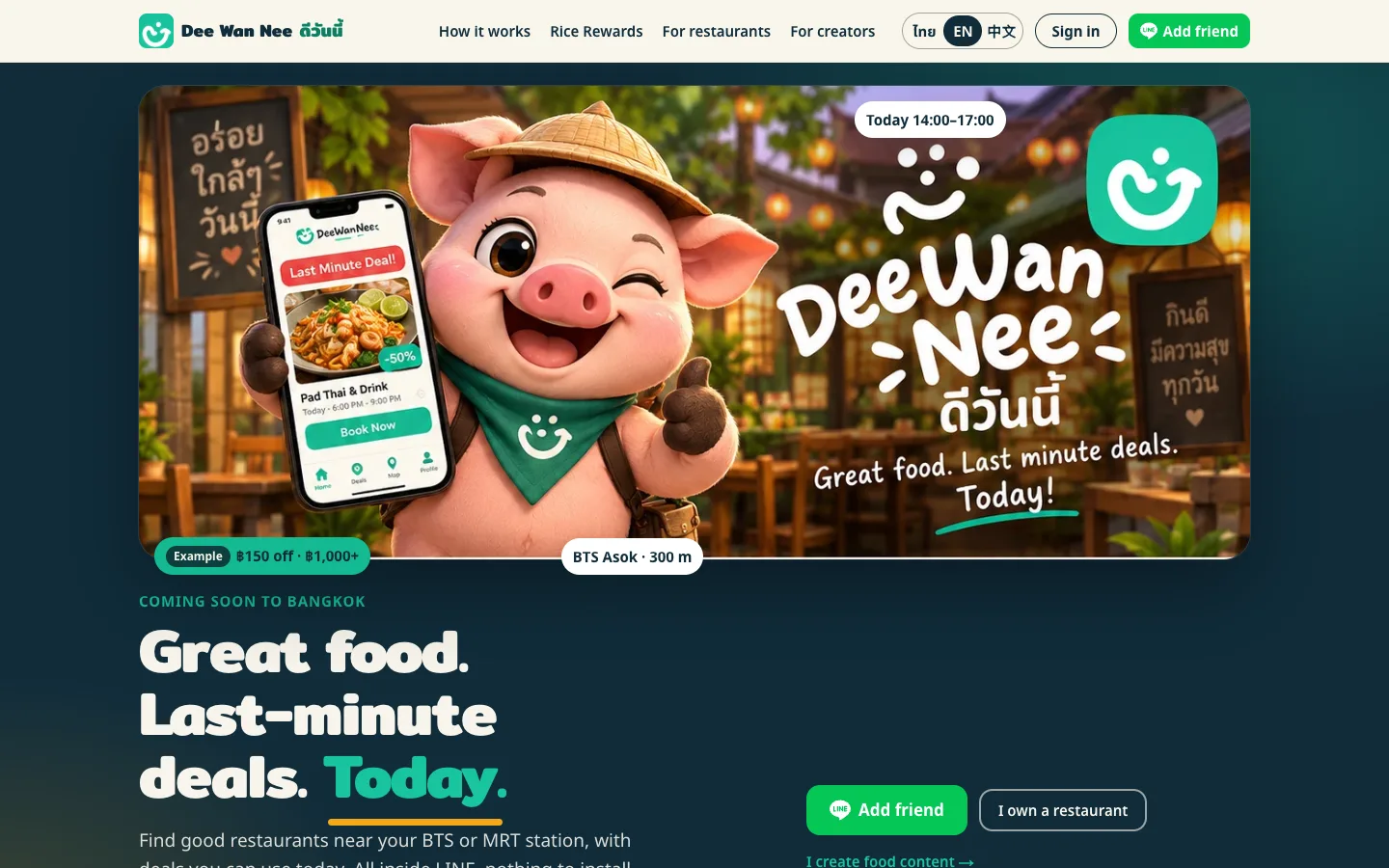
A home page with a face
Moo, the food-finder pig, holds the app and winks. The promise is three short lines, and the main button adds Dee Wan Nee as a friend in LINE. There is nothing to install.
The band along the bottom lists BTS and MRT stations, because in Bangkok "near me" means near my station.
- Thai first, English and Chinese alongside
- Everything happens in LINE
- Restaurant owners have their own door on the same page
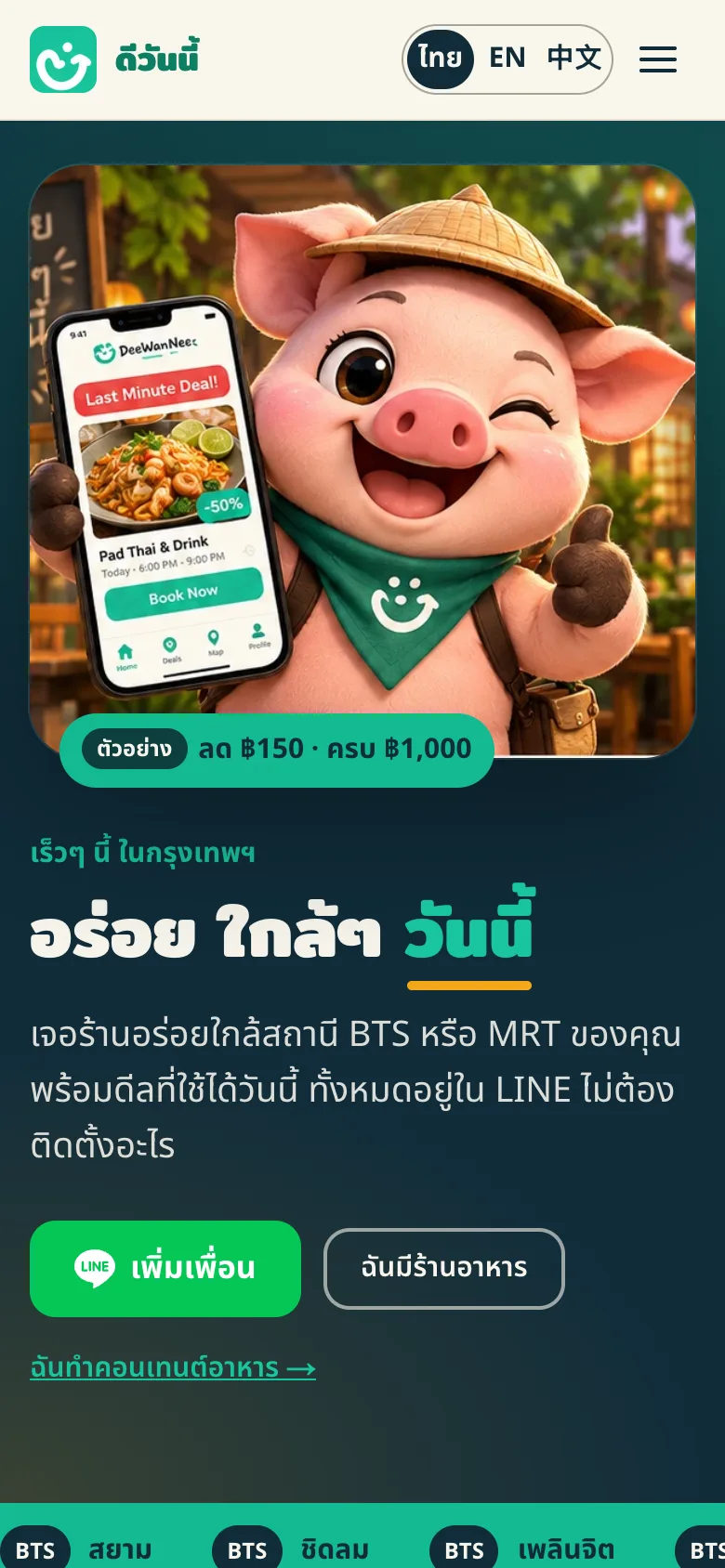
Home on a phone, Thai 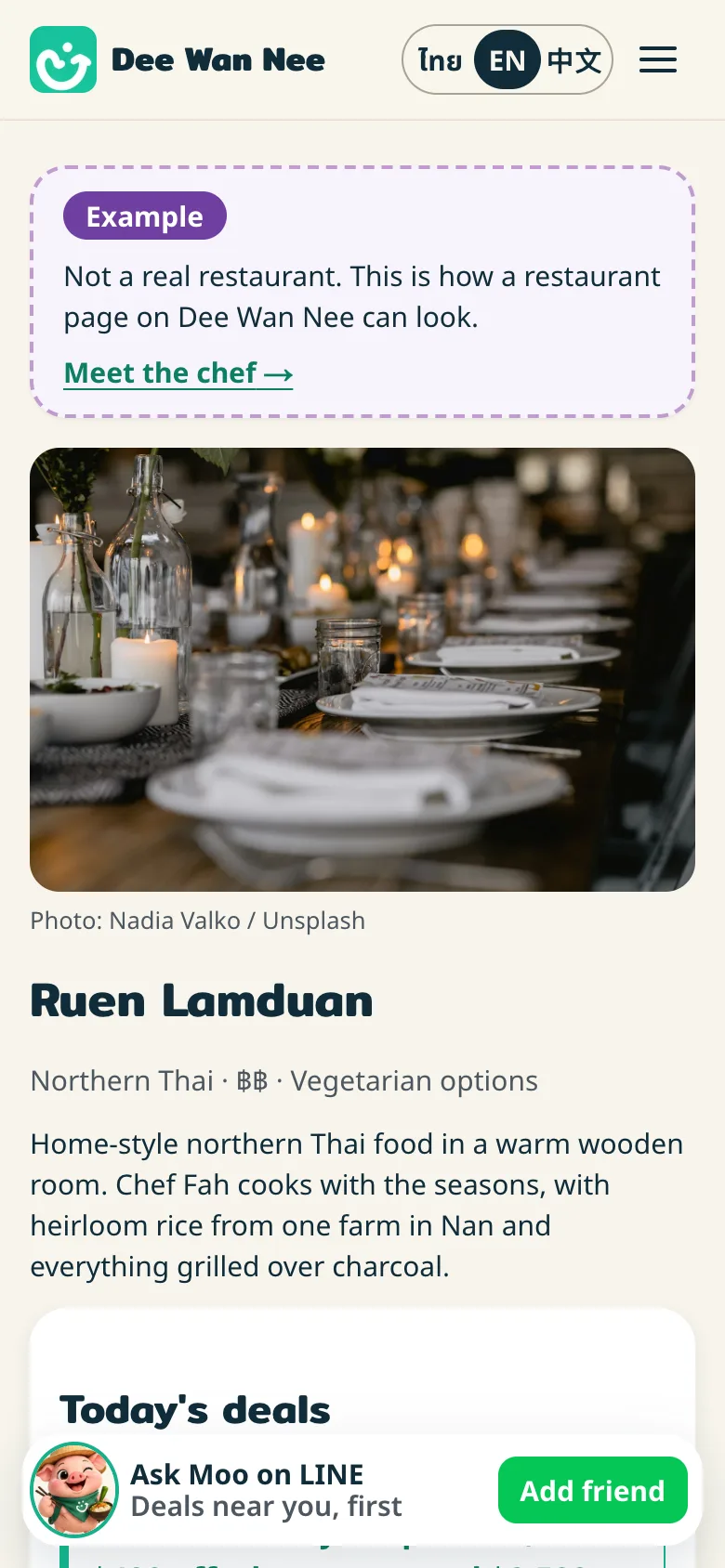
The example restaurant page 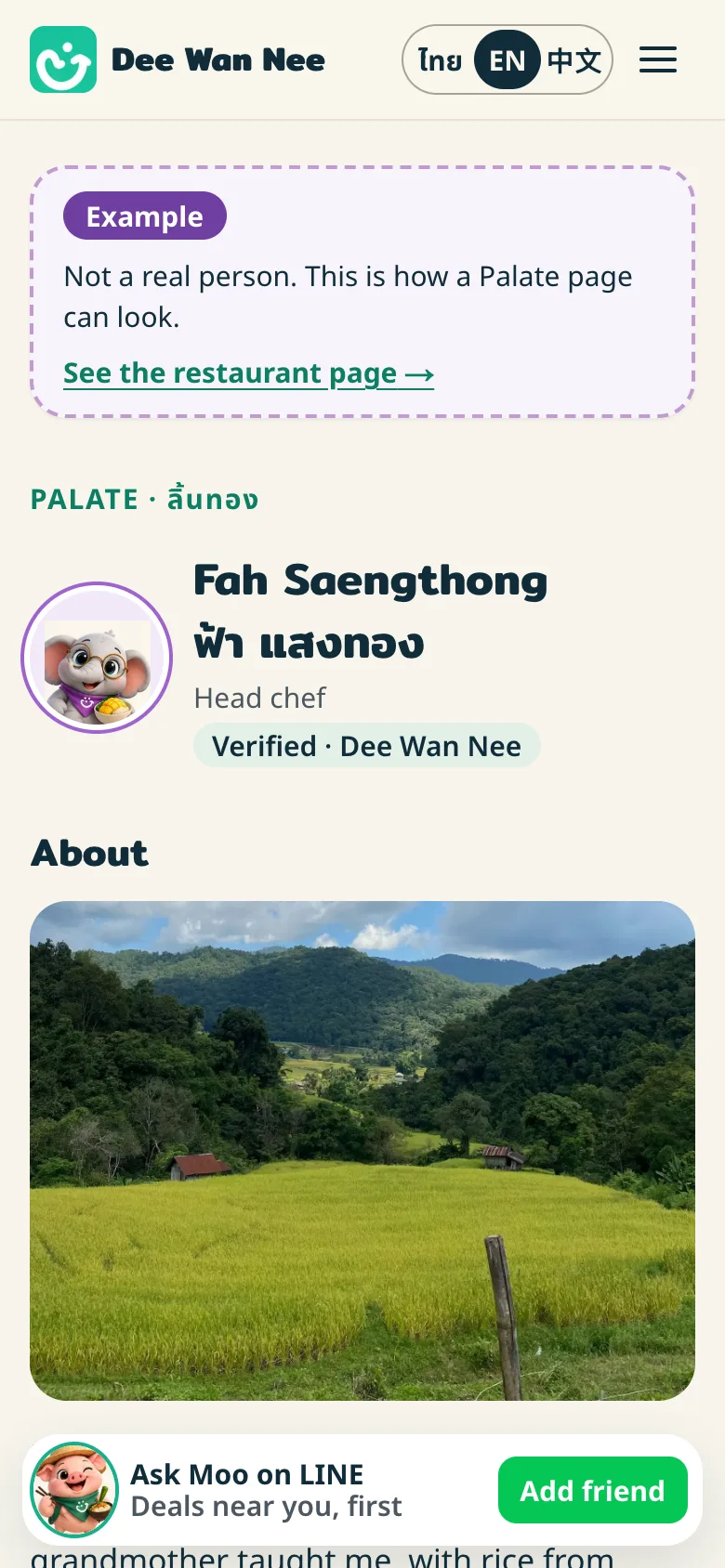
The example chef profile
Chapter 2
How a deal works
The whole product rests on one rule: staff confirm that the guest spent the minimum, and nothing more. No bill amounts, no calculator at the till.
The deal, from publish to plate
Five steps, two people, one QR code.
- 1. The restaurant publishes a deal
- A fixed discount on a minimum spend, for today, between set hours. A planner helps the owner check the deal will pay before it goes live.
- 2. A diner finds it
- By station, by area or on the map. Each deal shows when it runs and how far the walk is.
- 3. The diner claims it in LINE
- The claim becomes a voucher with a QR code that changes every few moments, so a screenshot cannot be reused.
- 4. Staff scan and confirm
- One scan, one tap to confirm the minimum spend was reached. The discount and the fee were fixed when the deal was published.
- 5. Both sides are rewarded
- The diner earns Rice Bowls towards rewards. The restaurant sees the table it filled.
One deal, drawn
Who does what, from the restaurant's side to the diner's and back.
- Restaurant
- Diner
- Platform
1Restaurant
Plan the deal
Discount, minimum spend, days and hours.
2Platform
Check and publish
Each edit is saved as a new version.
3Diner
Find it
By station, area or map.
4Diner
Claim in LINE
The claim becomes a voucher with a code.
5Restaurant
Scan at the table
Staff confirm the minimum spend.
6Platform
Record the redemption
Written once, to a ledger that only grows.
7Diner
Earn Rice Bowls
Points towards rewards.
8Restaurant
See the result
The tables the deal filled.
What guests see
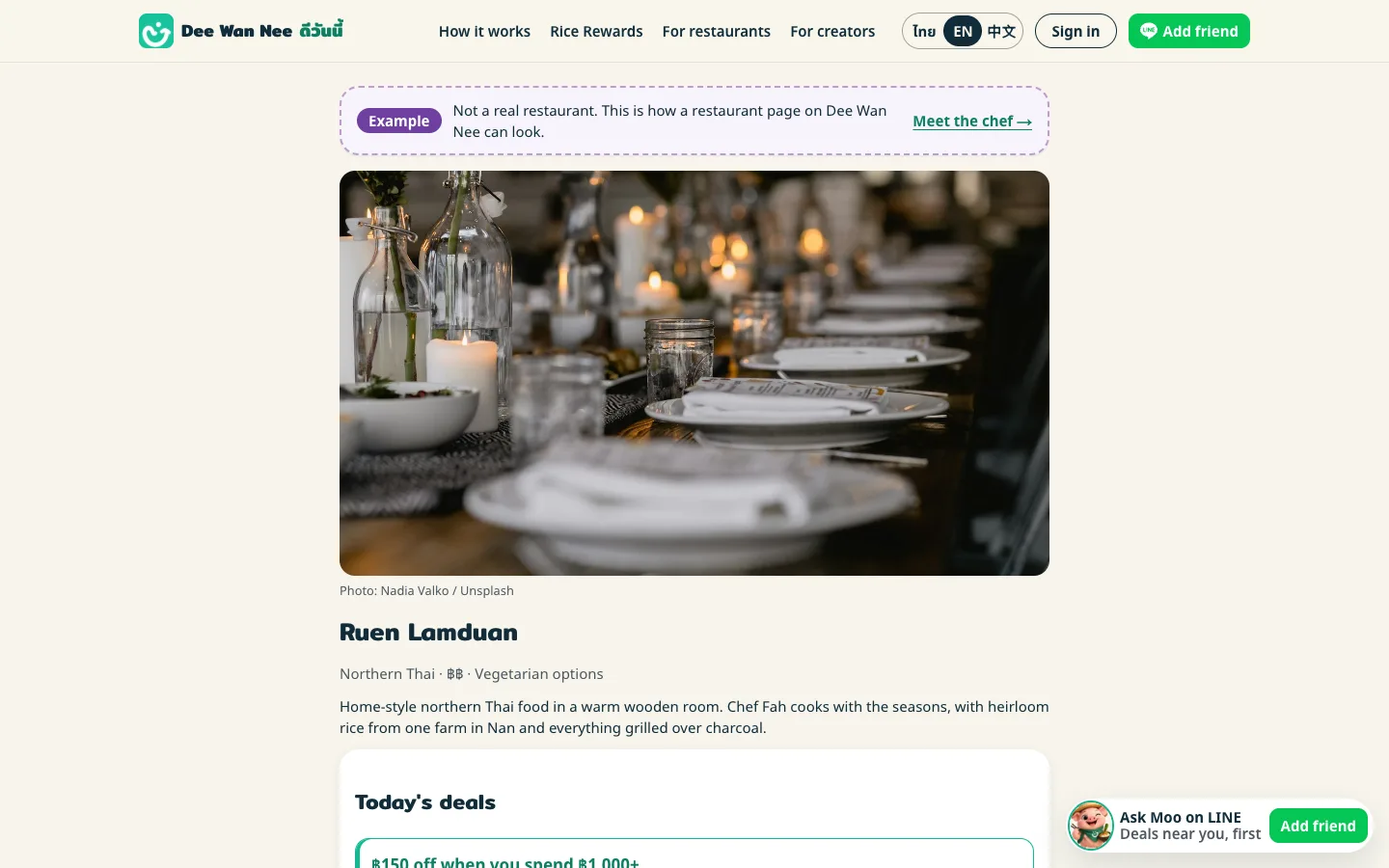
A restaurant page with photos, the kitchen's story, today's deals, opening hours, the nearest station and a map. This one is an example, and the purple box at the top says so in plain words.
Owners edit their page in a three-column editor with a live preview of exactly this view.
Bringing restaurants on board
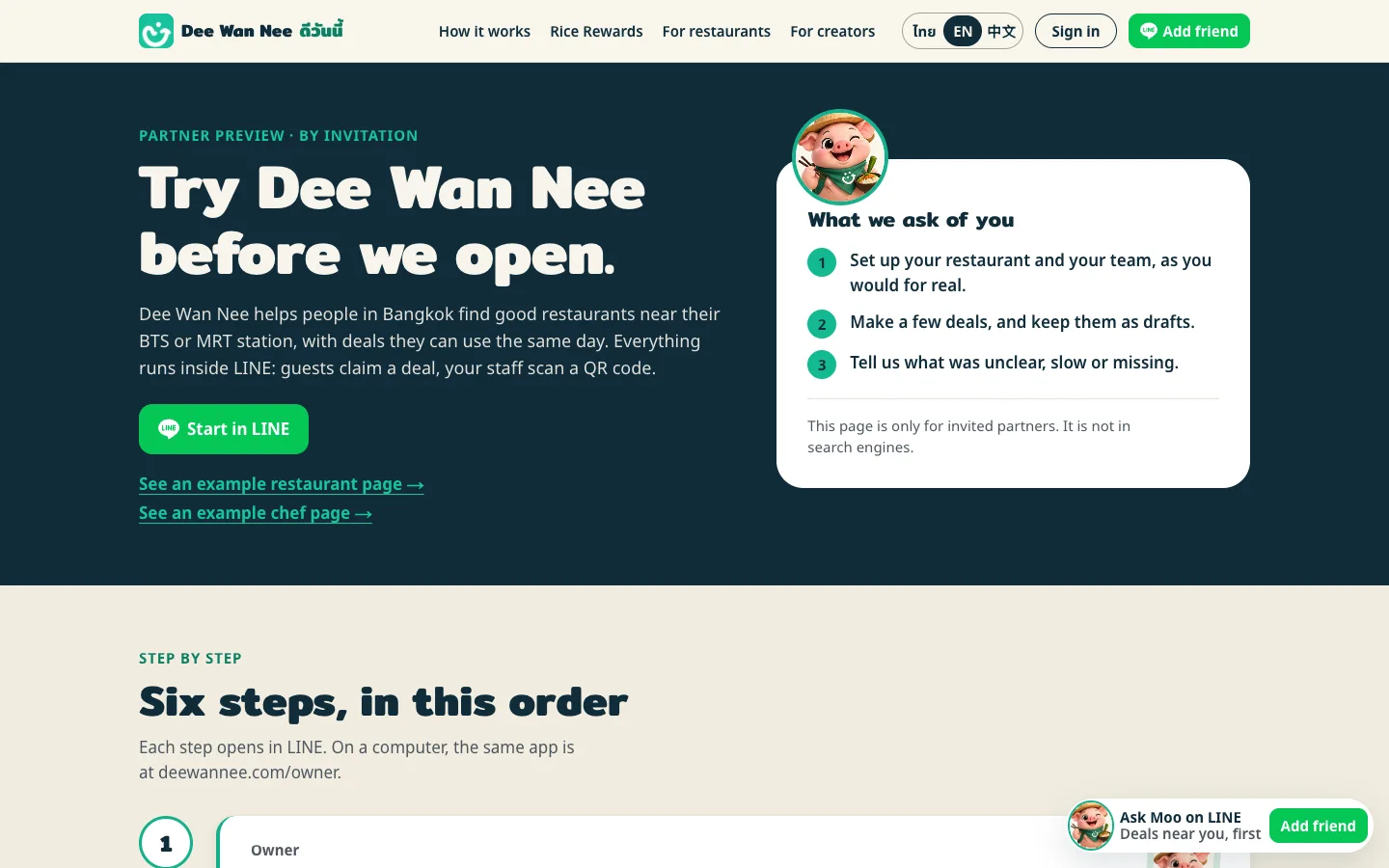
Before opening, invited partners get a preview page: what is asked of them, and six steps in order. An owner adds their place from LINE with a map search, and it goes live once it has a name, hours and a cover photo.
Ownership is checked properly. A business paper and an ID are read by Claude, then a person reviews the claim before the restaurant is marked as verified.
Palate: profiles for the people who cook
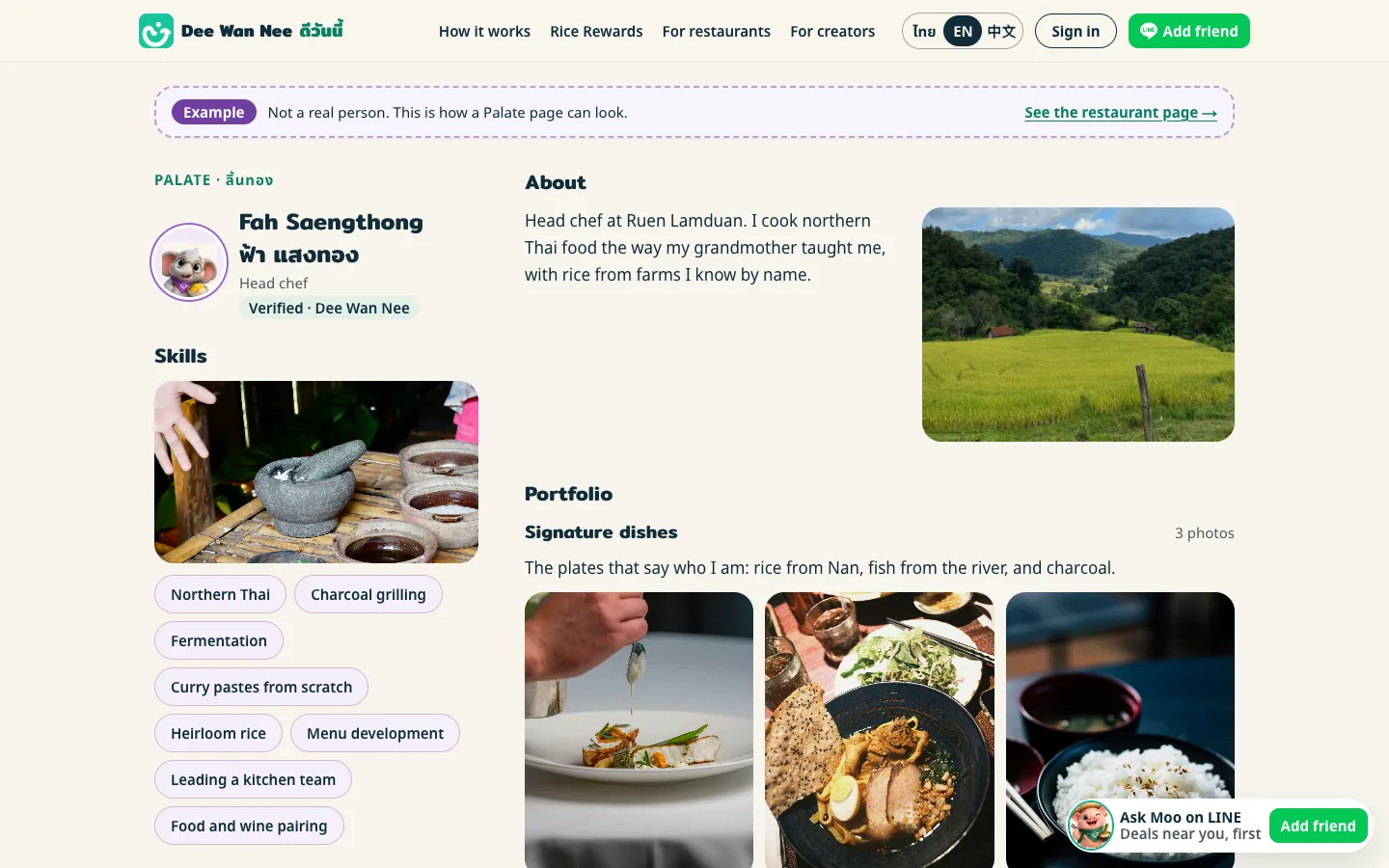
Chefs and sommeliers get a career page: where they have worked, what they are known for, a portfolio of plates. Each entry is confirmed by the restaurant, so the page means something.
The profile shown is an example with a made-up chef.
Added in the latest build
Built and tested in the second half of November, ahead of opening. None of it is public yet.
- "Who are you?" in LINE
- A new friend picks Foodie, Restaurant or Chef and pro, and gets a short menu made for that role. A restaurant owner finds and adds their place in one to three taps.
- Follow and save
- Diners save restaurants and follow chefs, then see their deals and posts in one Following feed. Follows are private: no public counts, no likes.
- Posts on Palate
- Chefs post a few words and up to six photos. Early posts are checked by a person first, and anyone can report a post without signing in.
- Event menus
- Restaurants set up set menus for events: price per person, allergens, seats per date and a refund rule. They cannot be published until payments are switched on.
- Restaurants refer restaurants
- A restaurant shares its link, and when the place it brought in publishes a first deal, both get a month of lower fees, counted and applied automatically.
- Deal results
- Owners see, per deal, how many vouchers were claimed, used and left over across 7, 30 and 90 days.
Chapter 3
The characters
Six food guides, each with a job. They make a deals app feel like a friend's recommendation, and they give every screen and message a recognisable voice.
The Dee Wan Nee cast
Moo finds food. Kai hunts deals. Pa plans the evening. Pet checks the vibe. Chilly knows the spice. Jai is the local expert. The art is protected: it is never redrawn, cropped loosely or replaced.
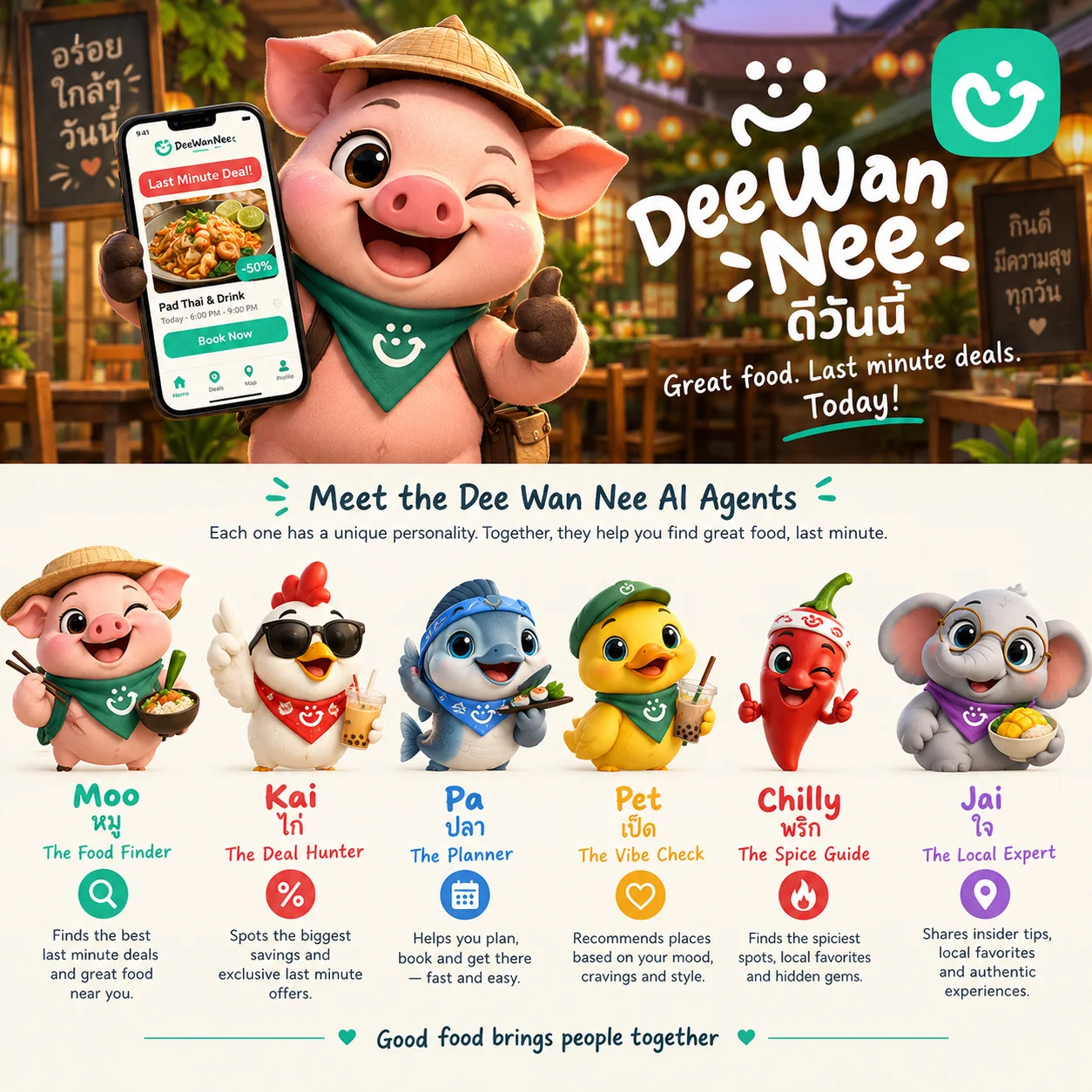

Moo, food finder 
Kai, deal hunter 
Pa, planner 
Pet, vibe check 
Chilly, spice guide 
Jai, local expert
Inside LINE
The rich menu is the app's home screen. Each new friend is greeted by a character.
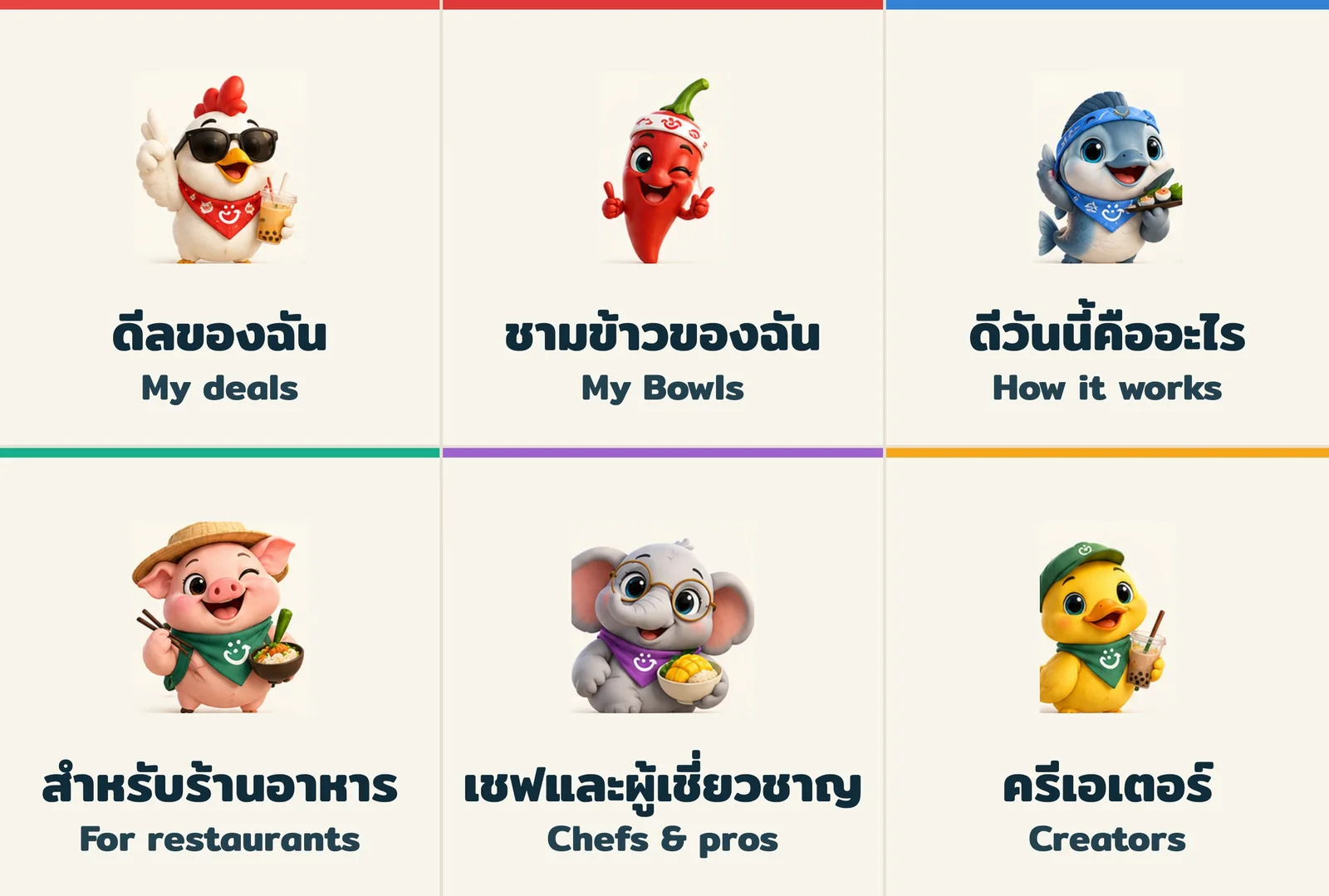
The LINE rich menu: six doors, one per character 
Welcome card, Moo 
Welcome card, Kai 
Welcome card, Jai
Link previews in three languages
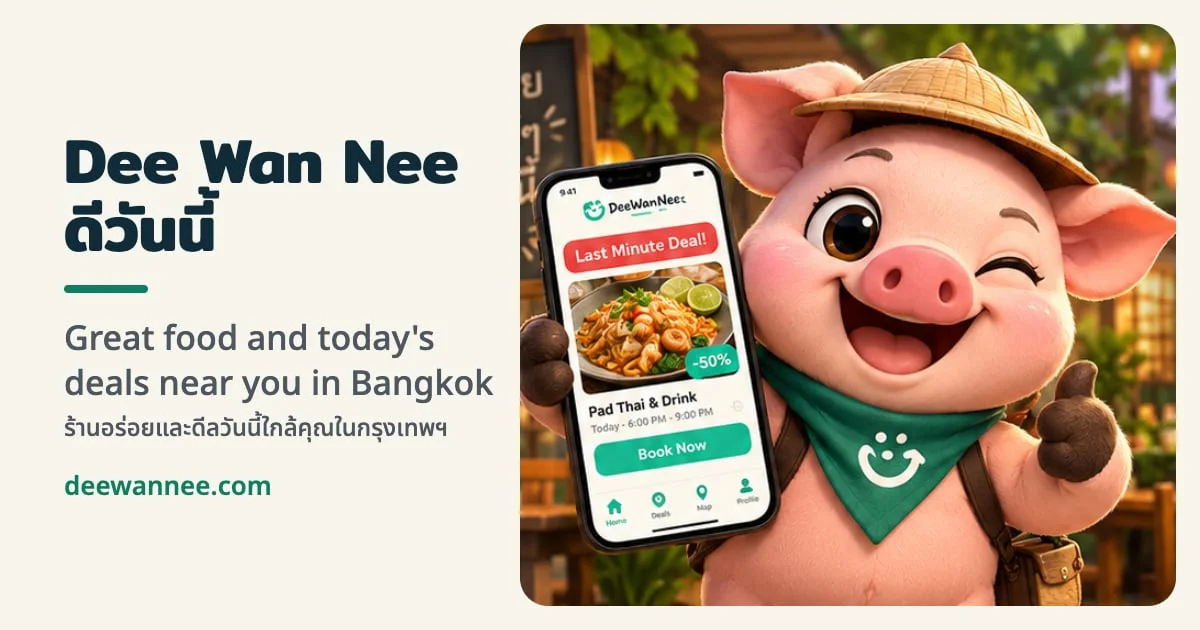
English 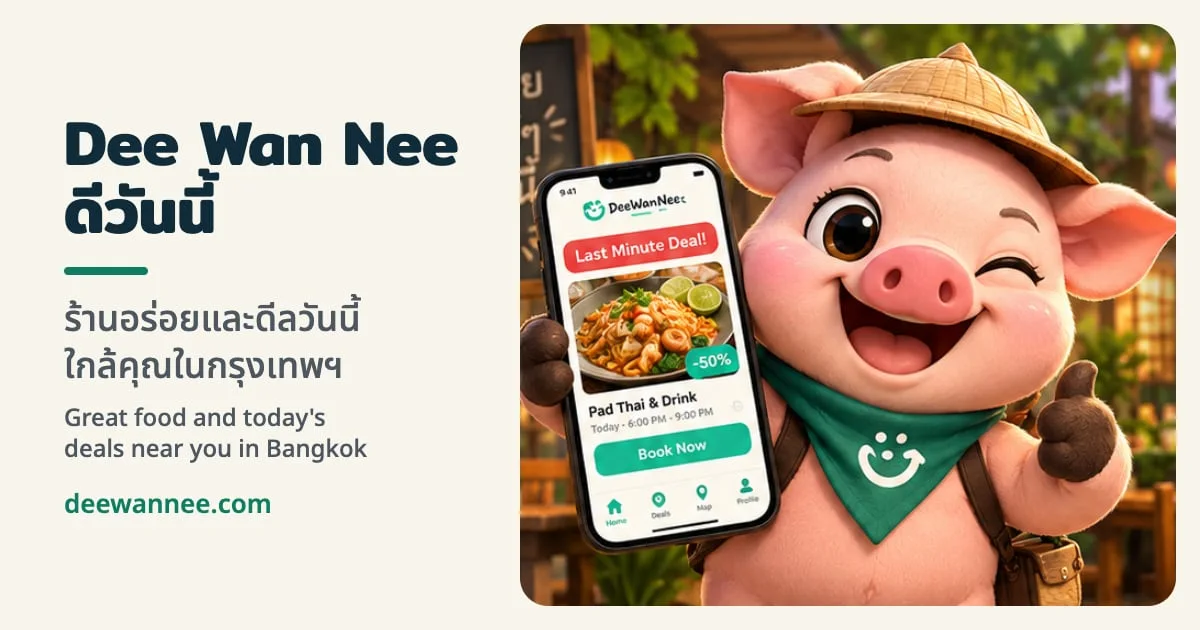
Thai 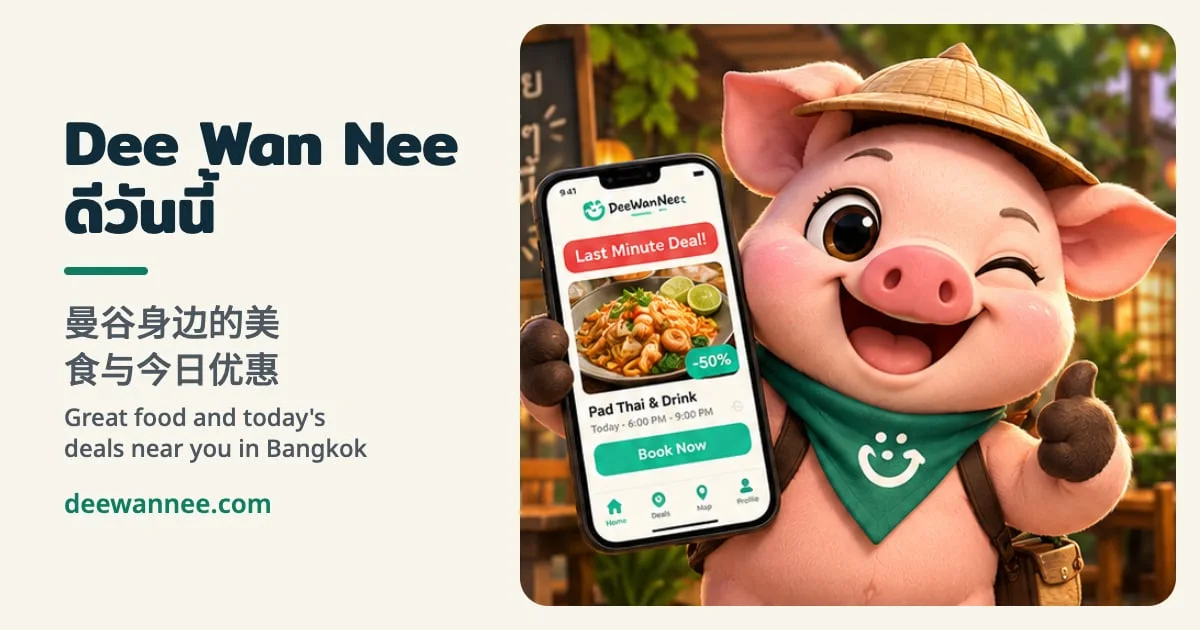
Chinese
Chapter 4
Under the hood
A deals platform handles money-like value and personal data, so the careful work is in the database.
The data model, simplified
The main records behind a deal and how they connect. An arrow reads "belongs to".
Scroll sideways to see it all
Simplified from the Postgres schema. The real database has about 50 tables; fields and access rules are left out here.
What keeps it honest
- Security rules in the database itself
- Access is decided by row-level security in Postgres, not by the app alone. A diner, a staff member, an owner and an admin each see only what is theirs, and 47 SQL test files check it.
- Ledgers that only grow
- Redemptions and reward points are written to append-only ledgers. A repeated scan cannot be counted twice.
- Exact maths for deals
- The deal planner works in exact fractions, with a set of known-answer test cases, so a restaurant is never shown a rounded-off profit.
- Search engines get every page
- A test fails the build if any public page is missing from the sitemap in any of the three languages.
- Four ways to sign in
- LINE, Google, Microsoft, or email and password, mapped to one account.
- Design tokens as the single source
- Colours and type live in one file that generates the CSS. Teal, cream and ink, plus one accent per character.
Chapter 5
Papers
Decisions are recorded with their reasons, and research is kept in the product's own library for reuse.
Research, architecture and decision records
A selection from the repository. Summaries are public; the full documents are shared on request.
Research1,145 lines, plus a 318-line source appendix
Will this deal pay? The deal-value calculator
The maths of a restaurant discount: when a deal fills a table profitably and when it gives margin away, turned into a planner with exact arithmetic and known-answer tests.
Research636 lines
Career timelines for chefs
How to show a cook's career so it is true: who confirms each entry, what counts as evidence, and how other professions solve it.
Research210 lines
Chef and sommelier profiles
What a profile needs to be useful to a diner, an employer and the person it describes.
Research79 lines
Verifying a business
How to check that the person claiming a restaurant really runs it, using Thai business papers and an ID, with a person making the final call.
Decision record20 to 105 lines each
Nine architecture decision records
LINE login mapped to database sessions, threshold deals with a fixed fee, reward units and their ledger, the creator programme, more ways to sign in, and one fee table.
Architecture323 and 303 lines
System overview and database design
How the public site, the LINE apps, the admin console and the database fit together, and the shape of every table.
Plan1,290 lines
Palate build plan
The full plan for career profiles: data model, flows for cooks and restaurants, the accreditation registry and the release steps.
Design9 documents
Design system: look, patterns, characters, governance
How the app should look and behave, the rules protecting the character art, and who may change what.
Built with
- Next.js 16
- React 19
- TypeScript
- Supabase Postgres
- Row-level security
- LINE LIFF
- MapLibre
- next-intl
- Claude API
- Vitest
- pgTAP
- Playwright
Next story
PaiTor
Sell your car yourself. Let it go on.